Here’s an overview and conclusion of Maruti Suzuki eVitara (also referred to as eVX) as of late 2025, what it promises, what remains uncertain, and whether it may be a strong pick for buyers.
What is the eVitara?
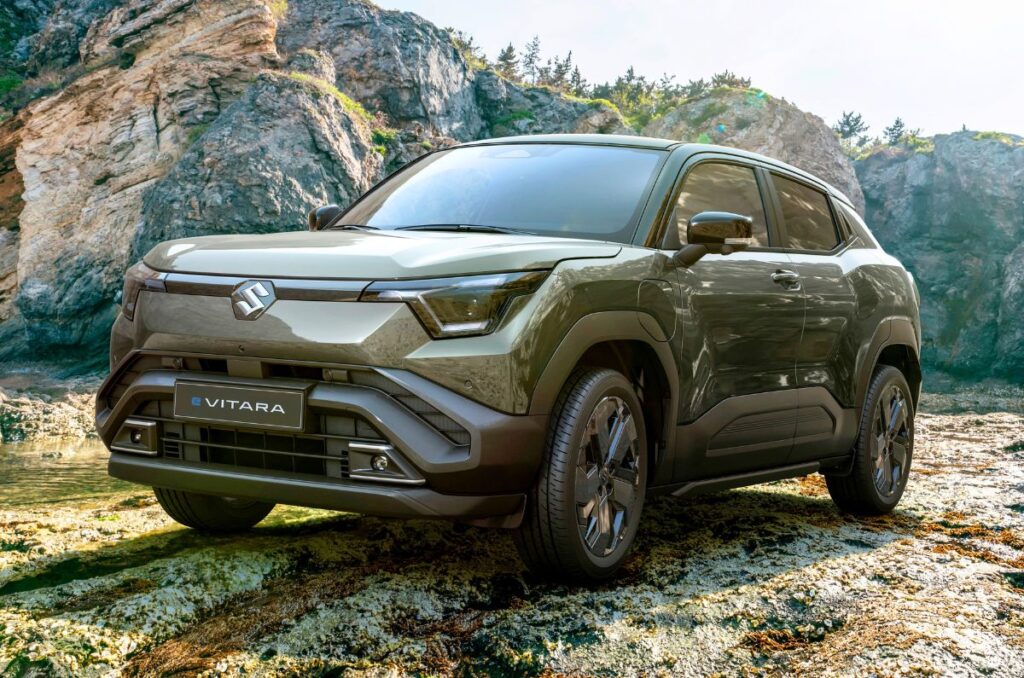
eVitara is the first full-electric SUV from Maruti Suzuki, built on a dedicated EV platform.
Globally, it traces back to the eVX concept, and the production-spec was revealed recently, with global market rollouts beginning even earlier, indicating Maruti’s EV ambitions are real.
The eVitara will be manufactured at Maruti’s Gujarat plant.
Dimensions, Style & Build
Measures around 4,275 mm in length, 1,800 mm in width, 1,635 mm in height, and rides on a 2,700 mm wheelbase.
Ground clearance is around 180 mm, giving it a decent SUV-like stance.
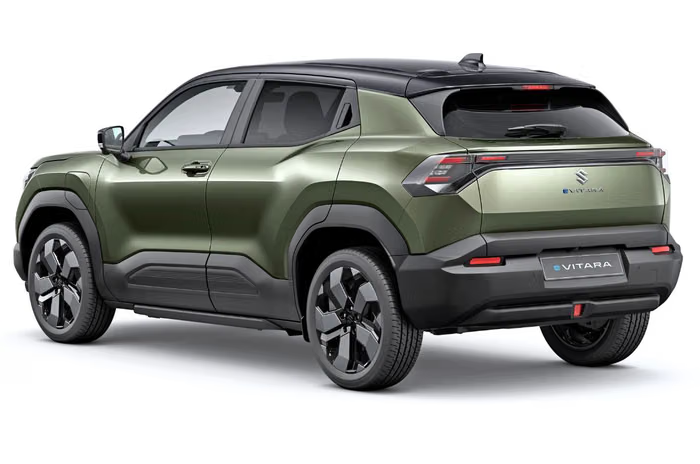
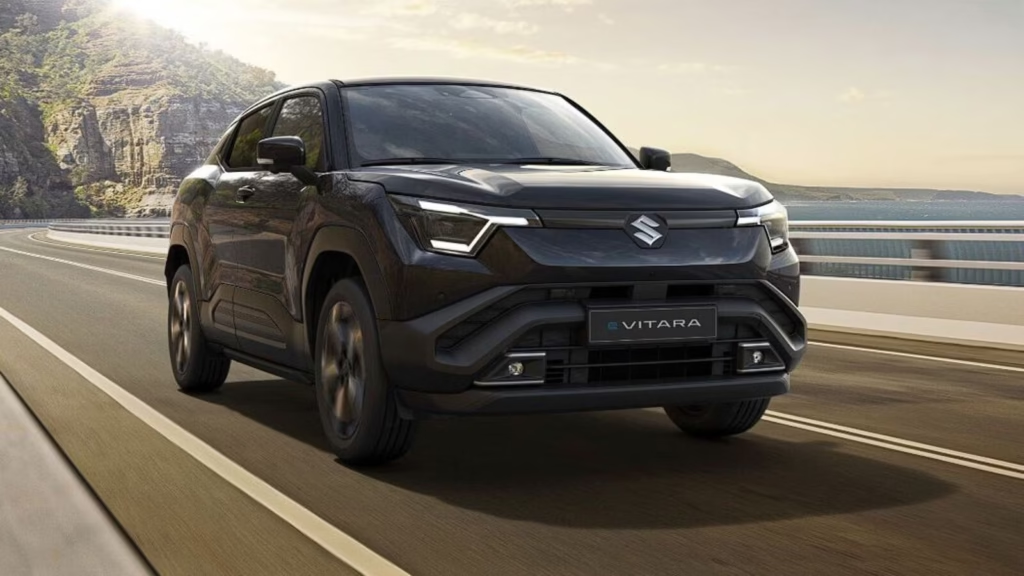
Exterior design is bold and somewhat rugged: closed-off grille, typical EV styling, sharp LED headlamps with DRLs, chunky body cladding, pronounced wheel arches, 18-inch alloys (19-inch for AWD globally), and C-pillar-mounted rear door handles giving a more crossover / SUV-ish profile.
The look is distinctly more aggressive than typical Maruti cars, signalling a departure from their regular compact/hatchback-heavy lineup.
Powertrain, Range & Performance
Two battery pack options are expected: 49 kWh and 61 kWh.
For the 49 kWh (likely entry) pack: roughly ~144 hp and ~189 Nm torque.
For the 61 kWh pack: ~174 hp (single-motor 2WD globally) and, where offered, a dual-motor AWD version with ~184 hp / 300 Nm.
Claimed range: up to 500–550 km on a single charge as per WLTP/global figures. Real-world usable range may be a bit lower, likely ~380–420 km under Indian driving conditions, which should still be sufficient for both city commuting and occasional highway trips. Charging: Fast-charging supported, making 0-80% in a reasonable time.
Drive modes, electric-car conveniences, instant torque, possible “Eco / Sport” modes, and general smoothness characteristic of EVs are expected.
Interior, Features & Comfort
- Cabin gets a fresh design — dual-tone theme, dual integrated screens (infotainment + digital instrument cluster), and a modern flat-floor.
- Expected modern conveniences: automatic climate control, wireless phone charger, electronic parking brake with auto-hold, possibly ventilated seats, 360° camera, panoramic sunroof, and more.
- Seating as per previews allows good legroom, and the second row seems fairly comfortable with adequate headroom. Boot space and storage are also reportedly better than some older Maruti cars. The overall feel is more premium than typical Maruti, an attempt to appeal to urban families wanting EV comfort + practicality.
Safety & EV Ecosystem Credibility
According to recent tests, eVitara has scored a 5-star rating under Bharat NCAP highest ever for a Maruti car. Adult occupant protection: ~31.49/32, child occupant protection: ~43/49.
Global-spec includes 6-airbags, ESP, traction control, ABS/EBD, and an advanced driver-assistance system (ADAS) with features like lane assist, adaptive cruise control, and emergency braking.
The battery tech uses modern standards, likely LFP / Blade-type batteries, especially in a global context, which tends to be safer and more durable, a plus for long-term EV reliability and resale value.
Moreover, Maruti’s wide service network and planned EV-ready infrastructure give it a real advantage over many competitors, which is critical given India’s still-developing charging ecosystem.
What’s Not Confirmed / Potential Weaknesses
As of now, AWD / dual-motor variants seen globally might not be available in India at launch. Indian spec may begin with front-wheel drive.
Though the claimed range is high (500–550 km), real-world range will likely be lower; typical Indian climate, traffic, driving conditions, and AC use will reduce actual numbers, so don’t expect “500 km real-life” daily.
Charging infrastructure across many Indian cities and especially smaller towns remains patchy, which can affect convenience for long-distance travel, though Maruti is reportedly expanding EV-service & charger network.
Running cost advantage and brand trust may matter, but the initial price looks a bit premium compared to some ICE/self-charging vehicles, meaning prospective buyers will need to value EV advantages, green, lower running costs to justify the spend.
Some features like ventilated seats, sunroof, ADAS, 360-cam, etc., are “expected” based on global spec or media previews, final India-spec may differ (or get trimmed), and the full official spec list may vary.